


He was a legendary bluesman who changed the face of 20th-century music. His powerful voice, raw guitar playing, and deep emotionality made him a pioneer of Chicago electric blues. It was Waters who inspired generations of rock musicians—from The Rolling Stones to Eric Clapton—transforming the blues into a global platform for expressing rebellion, dignity, and love. Learn more about the life and work of Keith Farrelle Cozart at chicago-trend.
Biography
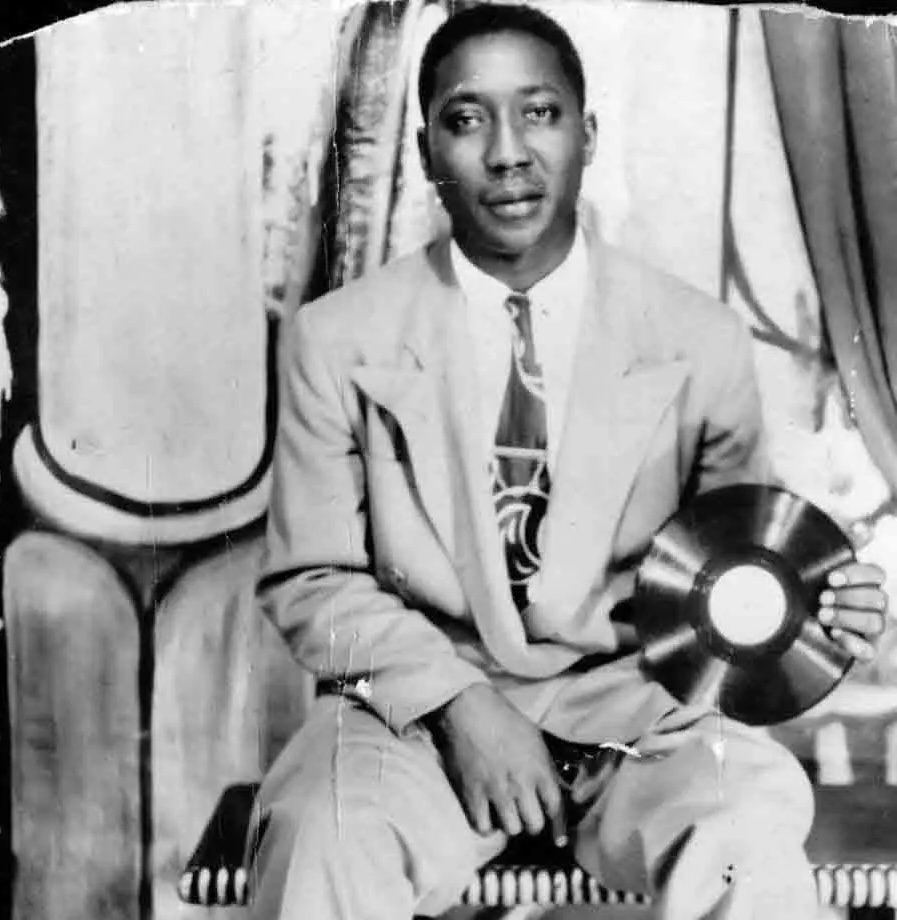
Muddy Waters was born McKinley Morganfield on April 4, 1913, in the small town of Rolling Fork, Mississippi. This was the birthplace of the Delta blues—a music steeped in the pain and hope of the African American South. Shortly after his birth, his family moved to the Stovall Plantation near Clarksdale, a more remote rural community where he spent his childhood among cotton fields. After his mother’s death, he was raised by his grandmother, Della Grant, who became not only his support system but also his first spiritual guide. Life in the South was difficult, marked by daily physical labor, poverty, and racism, but it was here that his musical sensitivity was forged. Local churches echoed with gospel music, while the streets and yards were filled with the spiritual blues. Young Muddy listened and absorbed everything he could. He started on the harmonica, crafting an instrument himself from wood and wire. At 17, he got his first guitar—an inexpensive but highly desired instrument. His idols were Robert Johnson and Son House, blues titans who sang of suffering, love, betrayal, and hope, baring their souls with every note. These influences deeply penetrated Muddy’s style: his heavy rhythm, piercing slide guitar, and sincere voice. In 1941, a fateful encounter changed his life—music ethnographer Alan Lomax arrived at Stovall, collecting folk music for the Library of Congress. Hearing the 28-year-old Muddy Waters play, Lomax immediately recorded several of his compositions on a field recorder. These recordings, including “Country Blues,” became a true revelation for music researchers.
For Muddy himself, that day was the catalyst for a new era. He heard his own voice on a record for the first time and realized he had to leave the South to fulfill his talent. Just a few years later, he would set off for Chicago, where he would forever change the course of music history.
The Move to Chicago
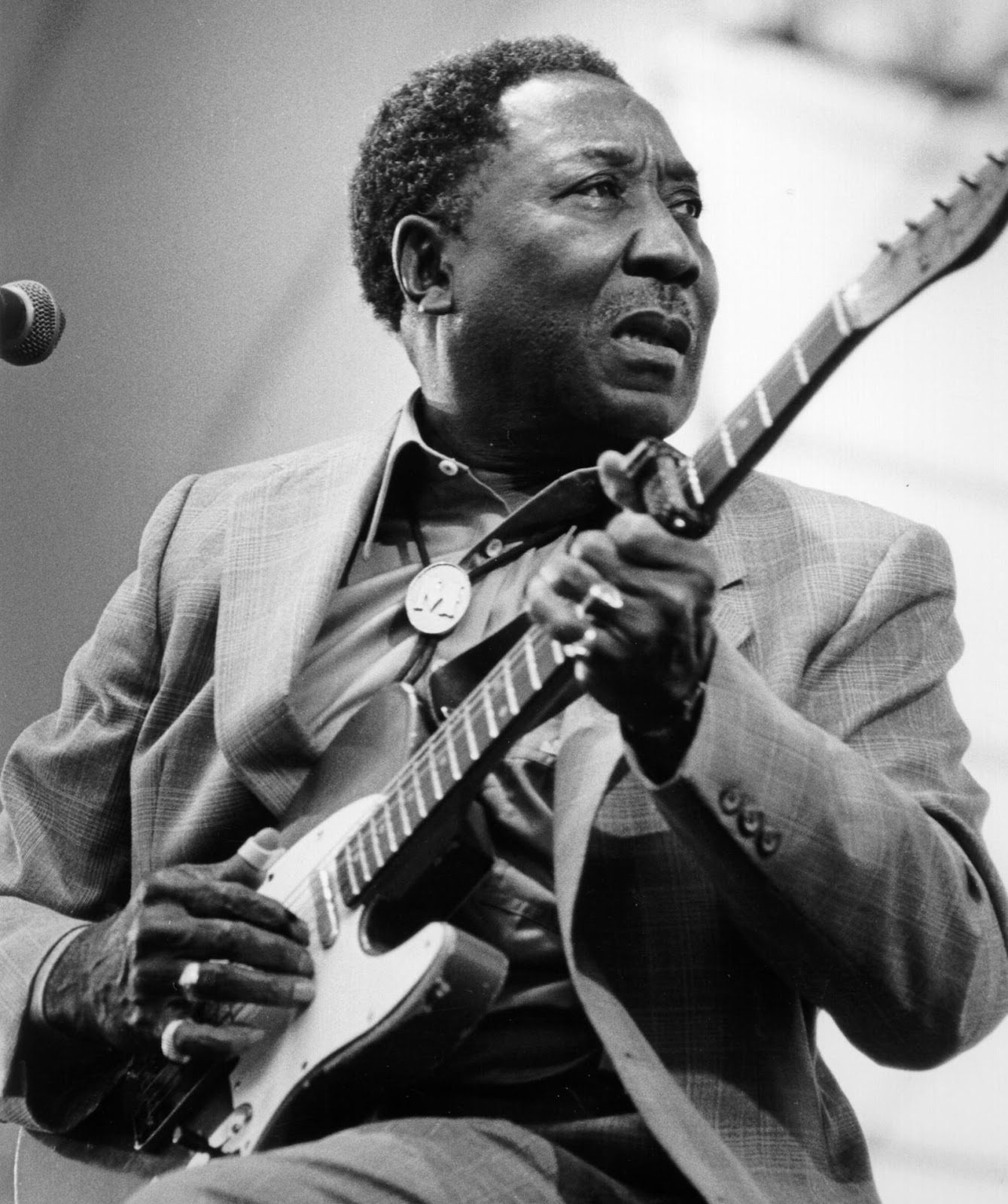
In 1943, Muddy Waters headed north to Chicago, a city that had become a mecca for thousands of African Americans fleeing the poverty and racial segregation of the South in search of work and a dignified life. But for Muddy, Chicago meant even more—it was the place where he could realize his musical dream. At first, he worked in construction and laundries, playing on the streets, in clubs, and at parties in his spare time, gradually building a reputation in the local blues scene. In Chicago, he first encountered a different kind of blues sound. Musicians began amplifying their instruments to be heard in the noisy bars. This prompted Muddy to pick up an electric guitar. His transition from acoustic Delta blues to a rich, aggressive electric blues was nothing short of a revolution. His slide guitar, plugged into an amplifier, sounded as if rage, longing, and desire were pouring directly from his soul.
In 1948, he recorded his first singles for Aristocrat Records (later Chess Records), including the hits “I Can’t Be Satisfied” and “I Feel Like Going Home.” These songs were a massive success and marked the beginning of a new era in blues. Muddy assembled a powerful band around him, featuring guitarist Jimmy Rogers, harmonica player Little Walter, and pianist Otis Spann. Together, they created the signature “Chicago sound” that would define the blues for decades. After establishing himself as the founder of this new sound, his influence quickly spread beyond the United States. The music he created in small clubs and at Chess Records became a cultural force that shaped the birth of rock and roll, the British blues boom, and an entire generation of musicians on both sides of the Atlantic. Muddy Waters transformed the blues into something much more than a lament over personal tragedy. His compositions were about power, confidence, sexuality, and resistance.
From Blues to Rock and Roll
Muddy Waters was one of the key figures who laid the foundation for the birth of rock and roll. His driving electric guitar sound, confident rhythm, and expressive vocals were direct predecessors to the style that would explode on the airwaves in the mid-1950s. A young Chuck Berry, who would soon become an icon of rock and roll, was working at Chess Records at the same time Muddy was recording there. They crossed paths and influenced each other, and Muddy often served as an inspiration for the new generation of musicians. Elvis Presley, Little Richard, and Bo Diddley all grew up listening to the blues and emulating its heroes. While many white performers commercialized the genre, its essence and roots invariably led back to its African American creators—among whom Muddy Waters was a central pillar. On stage, Muddy Waters wasn’t just a performer—he was a shaman of the blues. His gaze, movements, and deep voice mesmerized audiences. His songs told stories of pain, love, betrayal, faith, and magic—all the elements at the heart of African American culture and history.
In the 1960s, the British music scene experienced a full-blown blues explosion. Young musicians like Alexis Korner, Eric Clapton, Mick Jagger, Keith Richards, and Jimmy Page were “raised” on Muddy Waters’ records. His albums, brought over from the U.S., became collector’s items and sources of inspiration. The Rolling Stones, whose name was taken from Muddy’s song “Rollin’ Stone,” were among the first to publicly acknowledge their debt to him. In 1962, before they became famous, Mick Jagger and Keith Richards met at a train station when one saw the other carrying Muddy Waters vinyl records—and so began the story of one of the world’s most famous rock bands. Bands like The White Stripes, The Black Keys, and artists like Gary Clark Jr., John Mayer, and Dan Auerbach directly reference the blues legacy that Muddy established. They adopted not only the song structures but also the performance style—with distinctive riffs, a “dirty” guitar sound, and emotional vocals. His recordings have also been sampled in hip-hop by artists such as Nas, Common, and even Kendrick Lamar, cementing the blues as the root of the African American musical tradition—from slave spirituals to modern rap.
A Late-Career Resurgence
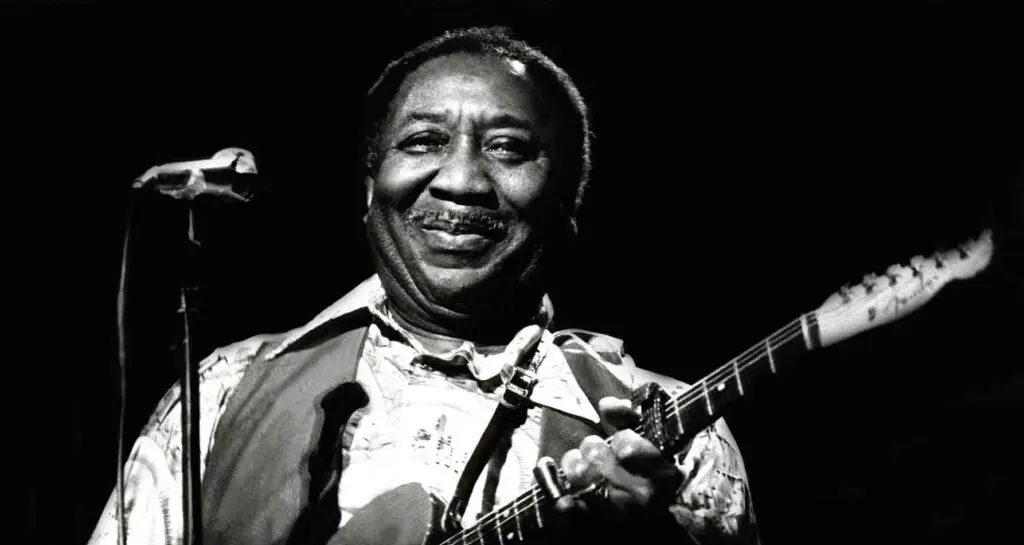
In the 1970s, Muddy toured Europe several times, where he was treated not just as a musician but as a living myth. In 1972, he performed in London with The Rolling Stones—a symbolic union of the father of the blues and his musical heirs. In 1977, Muddy Waters signed with Blue Sky Records, a label owned by guitarist and blues fanatic Johnny Winter. Winter produced three brilliant albums for Waters: “Hard Again” (1977), “I’m Ready” (1978), and “King Bee” (1981). These records earned Grammy Awards and brought Muddy back into the spotlight. The most iconic of these was “Hard Again,” where a new recording of “Mannish Boy” exploded with renewed force—not as a memory of the past, but as the manifesto of a living legend.
Muddy Waters passed away on April 30, 1983, in Westmont, Illinois, but his music never died. His influence continues to be felt even by artists who may not know his name. He has been inducted into the Rock and Roll Hall of Fame, has won several Grammy Awards, his songs are included in the list of “500 Songs That Shaped Rock and Roll,” and Rolling Stone magazine named him one of the greatest artists of all time.
Also, learn about the favorite of directors, John C. Reilly.