


His name is a symbol of authentic blues, uncorrupted by commercialism and trends. Buddy Guy is not just a musician; he is a man who plays as if every chord is a cry from the heart. He grew up in poverty and created his art in the shadow of others, but he never betrayed himself. His story is a journey from the fields of the South to the world stage, where he is recognized as a king of the guitar and a mentor to entire generations. This is the story of how Buddy Guy became the soul of the blues. You can also learn about the jazz legend Cleveland Eaton. More at chicago-trend.
Biography
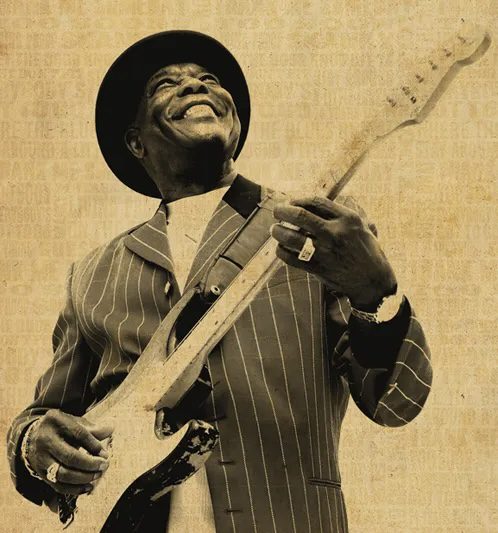
George “Buddy” Guy was born on July 30, 1936, in Lettsworth, Louisiana, to a family of sharecroppers who worked on sugar cane and cotton plantations. Life was hard and full of hardship. For young George, music was not an escape but a comfort, the voice of a soul yearning for freedom. He built his first instruments by hand—from tin cans, sticks, and stretched wires. It was a kind of “blues laboratory” where the boy intuitively discovered the secrets of sound. His early musical influences included the recordings of Lightnin’ Hopkins, T-Bone Walker, and John Lee Hooker, which he heard on the radio or on old records. As a teenager, Buddy taught himself to play acoustic guitar, improvising melodies that echoed his daily emotions, from exhaustion to dreams. Despite their poverty, his family supported his passion. In the 1950s, Buddy attended university in Baton Rouge, but his real education took place in the local clubs where he performed at night. He played his first gigs in small halls, cafes, and at amateur shows, gradually building a reputation as a guitarist with a wild drive.
Working in Chicago
In 1957, with a few dollars in his pocket and an old guitar, Buddy took a major leap of faith and moved to Chicago. The city was already a mecca for bluesmen, home to legends like Muddy Waters, Howlin’ Wolf, Willie Dixon, and Junior Wells. Chicago became his second home and the musical arena where he transformed from a young enthusiast into one of the most influential guitarists in the world. This move marked a new stage in Guy’s life—a path to recognition and the formation of his own style, which would later become the gold standard for blues and rock and roll.
After signing with Chess Records in 1960, Buddy hoped for a solo career, but the reality was more complicated. Producers were wary of his stage energy and “unrestrained” guitar playing, considering it too expressive for classic blues. Guy became a session musician, playing for artists like Muddy Waters, Sonny Boy Williamson, Koko Taylor, and Little Walter. Although his name was in the shadows, he was the one creating the magnetic sound that defined the era. But Buddy did not give in. He continued to hone his signature style—explosive, emotionally charged, and filled with feedback, string bends, virtuosic runs, and effects. Buddy Guy didn’t just imitate his teachers; he transformed the blues, bringing it new energy, stage charisma, and technical audacity. He became a bridge between classic delta blues and the new wave of rock and roll, and he did so with a humility and dignity that only enhanced his legendary status.
Musical Style
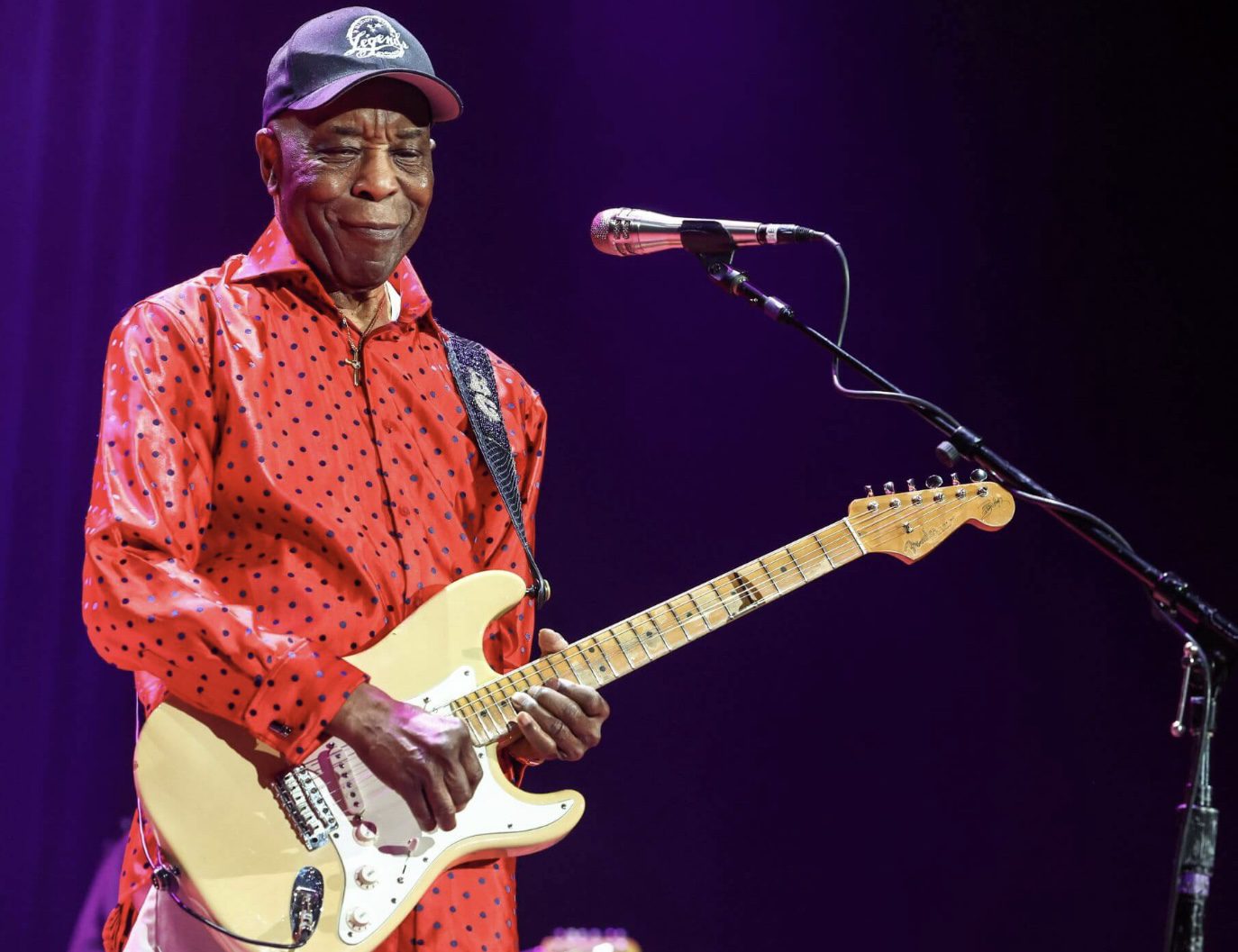
Buddy Guy’s blues is not a calm reflection but a living, explosive emotion that bursts forth and demands attention. His stage is not just a performance space but an arena where a battle is waged between feeling and technique, instinct and experience. During his concerts, Buddy always goes beyond expectations: he might walk into the audience mid-song, playing his guitar over their heads, drop to his knees, toss his instrument in the air, or create guitar solos with his teeth—not for show, but as a natural extension of his emotion. Every performance is an act of confession, telling his own story through the notes: the boy from a poor family who turned a homemade guitar into the voice of his soul, the young musician who was underestimated, and the master who inspired a generation. His songs—“Damn Right, I’ve Got the Blues,” “Feels Like Rain,” “Stone Crazy”—are not just hits but true stories from his life, where every note sounds like a heartbeat.
He is not afraid to stun the listener with emotion, to make them think, or even to make them cry. This is not background blues to accompany an evening; it is music that stops time, forcing you to listen and feel every word, every chord, every breath. And it is because of this sincerity, genuine passion, and stage audacity that Buddy Guy remains not just a living legend but a symbol that the blues is not a thing of the past. It is a force that lives in everyone who dares to speak the truth through music.
When we talk about Buddy Guy, we are not just talking about a guitarist but about a musician whose art transcends technique, notation, or genre. His music is not a collection of songs but a voice—the voice of an entire generation that grew up in poverty, fought for dignity, and found solace in the sounds of the blues.
The main feature of Buddy Guy’s style is his extraordinary emotional expression. Each of his performances is not a rehearsal or a demonstration of skill but an honest conversation with the audience. Buddy Guy used his guitar not as an instrument but as another voice. He could play with his teeth, pluck the strings with a microphone stand, walk through the crowd with his guitar, and improvise in the moment. It was this unpredictability and freedom that made him an icon. Although his roots are in traditional blues, Buddy Guy boldly broke genre boundaries. His sound was loud, aggressive, and dynamic. This was blues that didn’t ask but demanded attention. And it was this energy that inspired the rock musicians of the 1960s and 1970s: Jimi Hendrix, Eric Clapton, Jeff Beck, and Jimmy Page. Buddy became the bridge between the roots of the blues and its new, electric future. In Buddy Guy’s songs, you find simple yet profound stories about love and betrayal, pain and hope, struggle and freedom.
Recognition and Legacy
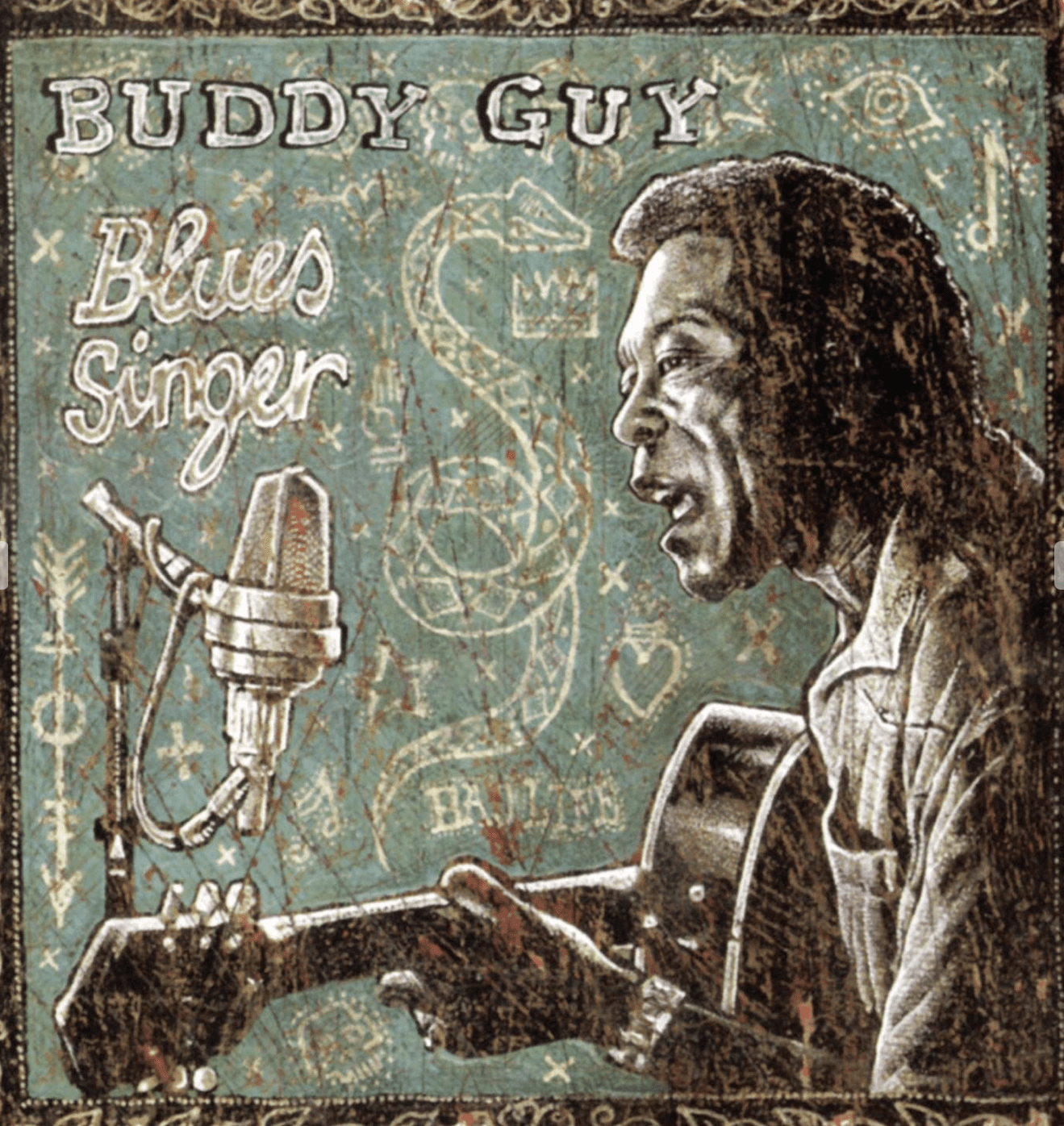
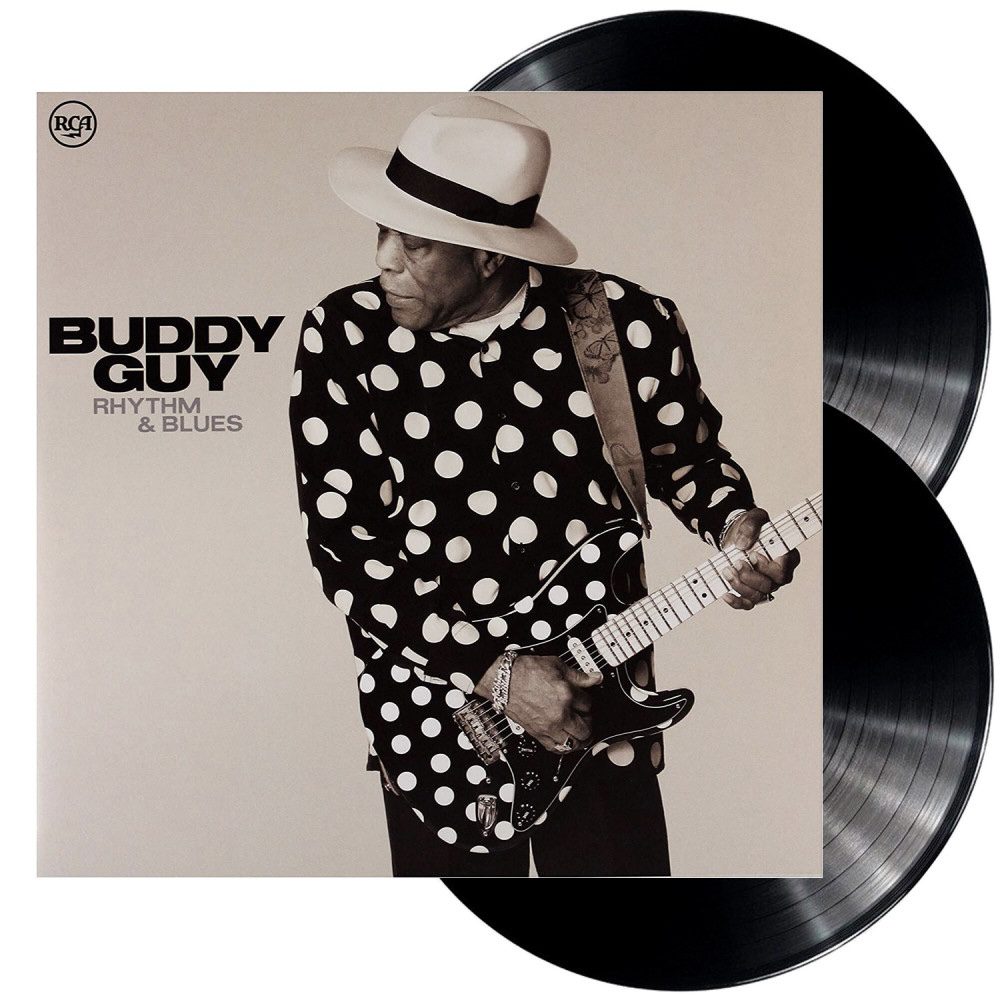
Recognition didn’t come to Buddy Guy overnight, but when the world finally heard the true voice of the blues in his guitar and vocals, there was no stopping it. He endured years when record companies didn’t know what to do with him, when he played as a session musician in the shadows, but his talent, depth, and energy could not be hidden for long. The early 1990s were a triumph for him: the release of the album “Damn Right, I’ve Got the Blues” not only brought him back into the spotlight but also launched a new era in his career. The album was loud, emotional, and technically brilliant, proving that true blues is eternally relevant.
From that moment on, Buddy began to receive not only applause but also official honors: eight Grammy Awards, including one for Lifetime Achievement, the National Medal of Arts, the Kennedy Center Honors, and finally, a well-deserved place in the Rock and Roll Hall of Fame. His influence is recognized not only by musicians but also by politicians, cultural figures, and everyday fans—anyone who has ever heard him play live.
In 1989, Buddy opened his club, “Buddy Guy’s Legends,” in the heart of Chicago—the city that became his musical home. This club is not just a live music venue but a cultural shrine where the world’s best blues musicians play, where the spirit of Chicago blues is palpable, and where the maestro himself often appears on stage. Here, the blues lives not as a museum exhibit but as the pulse of the city—free, passionate, and restless. But Buddy Guy’s greatest legacy is not the awards or prestigious stages. It’s the people he inspired: rock stars, young guitarists, and club musicians who, after hearing his sound, changed their approach to playing. He became a bridge between generations—from the deep delta blues to electric rock, from Son House to John Mayer.
He carries within him the entire history of the blues: the song of the cotton fields, the cry of the Chicago streets, the energy of festivals, and the silence of loneliness. He is not just a musician. He is the living memory of a music that knows how to hurt and inspire at the same time. And that is why he is called not just a legend, but the soul of the blues.
Also, learn about the success story of Raquel Welch.