


Tracy Letts is one of the most significant figures in contemporary American theater. His name is known not only in theatrical circles but also among film audiences, as he brilliantly combines an acting career with his talent as a playwright. Letts is a Pulitzer Prize winner, a Tony Award laureate, and a nominee for numerous other awards, who has managed to transform his personal experiences, sharp observations, and a subtle sense of drama into compelling stories for the stage and screen. Also, learn about another legend of the Chicago theater scene—Anthony Rapp. Read more at chicago-trend.com.
Biography
Actor Tracy Letts was born in 1965 in Tulsa, Oklahoma, into a family where culture and language were part of daily life. His father, Dennis Letts, was an actor and English professor, while his mother, Billie Letts, was a best-selling novelist. This atmosphere of love for art and literature shaped Tracy’s character, his sensitivity to words, and his deep understanding of human psychology. At the age of 20, he left his home state and moved to Chicago—a city that would become a turning point in his life. It was in Chicago that Letts immersed himself in the theater scene, working as a waiter by day and performing on small stages by night. In the 1980s, he joined the Steppenwolf Theatre Company, a legendary theater known for its gritty, emotionally intense drama and commitment to powerful acting. Steppenwolf became not just a workplace but a creative catalyst for Letts. It was here that he began not only to act but also to write. His plays were born from reflections, observations, and experiences—his characters were complex and ambiguous. Steppenwolf premiered his first major works, including “Killer Joe” and “Bug,” which captured the attention of critics and solidified his status as one of the strongest voices in new American drama.

Plays
“August: Osage County” became not just Tracy Letts’ most famous play, but a true milestone in modern American playwriting. First staged in 2007 at Steppenwolf, the drama quickly moved to Broadway, where it gained immense popularity and critical acclaim. Its grand scale—13 characters and over three hours of stage time—revived the genre of the great American family drama, drawing comparisons to the works of Eugene O’Neill and Tennessee Williams. The play unfolds during a sweltering August in Oklahoma, in the home of the Weston family. It explores the complex relationships between a mother and her daughters, and the impact of generations raised amidst silence, addiction, and loss. Letts demonstrates with brilliant precision how truth and pain can simultaneously destroy and liberate.
After its massive theatrical success, the play was adapted into a film. The 2013 movie featured an all-star cast, including Meryl Streep, Julia Roberts, and Chris Cooper. Despite a mixed critical reception, the film was a significant event that further expanded Letts’ influence beyond the theater world.
His other works, such as “Bug” and “Killer Joe,” are distinguished by a darker atmosphere—they are psychological thrillers with elements of absurdity and violence, both of which were also adapted for the screen by director William Friedkin. “Man from Nebraska,” a 2004 Pulitzer finalist, explores the spiritual crisis of a middle-aged American man. “Linda Vista” is a sad and funny story about loneliness, love, and aging. Everything Letts writes shares a characteristic trait: a deep understanding of internal conflict, hidden pain, and human imperfection.
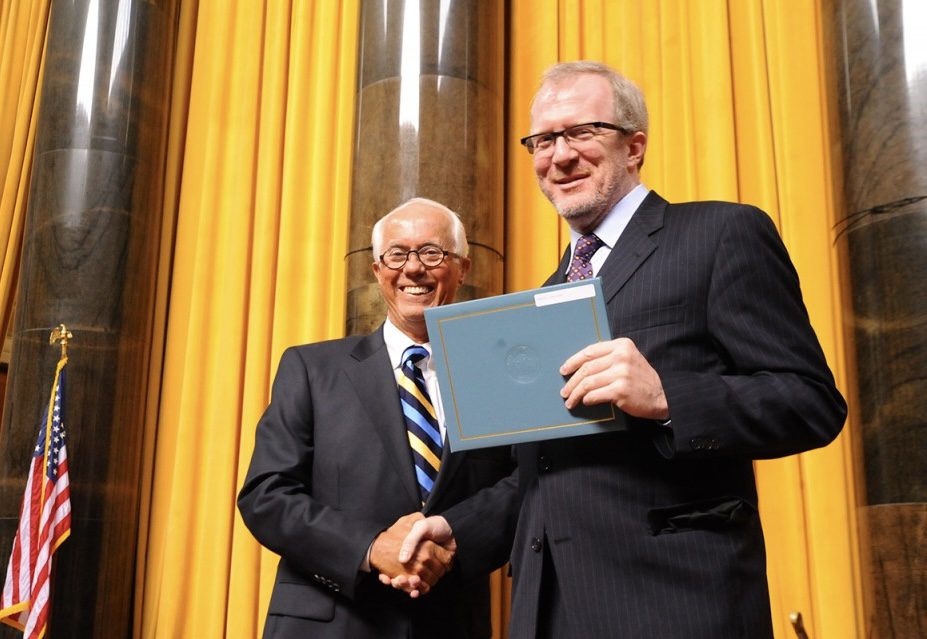
Stage Actor
Tracy Letts’ calling as an actor is not merely parallel to his writing career; it is an organic part of his creative nature. When he performs on stage, he doesn’t just play roles—he lives them, delving into the character’s psychology with the same sharp focus he applies to the heroes in his plays. The Steppenwolf Theatre was where his acting talent developed alongside his playwriting. One of Letts’ most acclaimed stage roles was in the Broadway revival of Edward Albee’s “Who’s Afraid of Virginia Woolf?” His portrayal of George earned him the prestigious Tony Award for Best Actor in a Play in 2013. Critics praised his ability to embody a complex emotional range, from biting sarcasm to tender vulnerability.
On television, he appeared in the series “Divorce,” where he showcased the ironic side of his acting range. And in “The Big Short,” a drama about the financial crisis, Letts brought a sense of balance to the film, portraying a complex character with a recognizably dramatic depth. His acting is always about truth. He is not afraid to be vulnerable, weak, or awkward—and therein lies his strength.
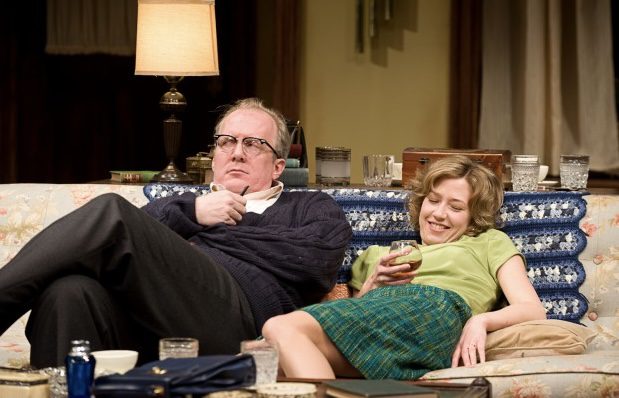
Playwright
Tracy Letts’ voice resonates from the stage and screen not as a sermon, but as a profound human confession—honest, painful, and sometimes absurd. He doesn’t offer easy answers but forces us to ask important questions: about responsibility, love, losing oneself, and the line between care and cruelty. As a playwright, he often tells stories of broken families—not as an exception, but as the norm of modern life. His characters are not heroes but people in whom we can easily recognize ourselves. He is not afraid to show the grotesque and the vulnerable, but even in the darkest moments, he leaves a glimmer of light—irony, tenderness, humanity. Tracy Letts is shaping a new stage ethic where truth is more important than form, and empathy is more powerful than catharsis.
Tracy Letts is a unique phenomenon in American culture. His contributions to theater, both as a playwright and an actor, have already become part of the modern canon. He proves that theater is not dying as long as there are honest stories to be told on stage, and that art is, and always will be, a conversation.
Also, learn about the acting career of Jesse Williams.
Sources: