Chicago’s theatrical history is nothing short of fascinating. It all began in 1834, a full three years before the city was even incorporated. The first professional public performance was an eye-opener: a showman named Mr. Bowers promised to juggle flaming balls, eat burning sealing wax, and walk on red-hot coals and molten lead. Tickets for the spectacle were priced at 50 cents for adults and 25 cents for children, according to a report by chicago-trend.com.
Chicago’s First Theatre Companies
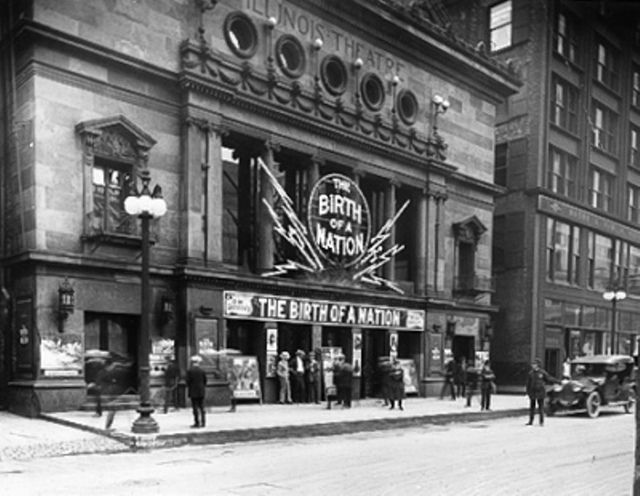
Over the next few years, other traveling performers followed suit. A circus set up shop on Lake Street in the fall of 1836, but it wasn’t until 1837 that Chicago’s first local theatre company, the Chicago Theatre, was founded.
The company was led by Harry Isherwood, who, along with his partner Alexander McKenzie, secured a license from the city council. They took over a defunct dining hall at the Sauganash Hotel and by late October, they were staging plays like “The Idiot Witness” and “The Carpenter of Rouen.” The theatre’s season lasted about six weeks, with a new show every night before the troupe hit the road to tour other cities.
After a successful run, Isherwood and McKenzie returned to Chicago in 1838 and formed a new company in an old wooden auction house. The city council was happy to grant them a license again. In September 1839, the Chicago Theatre presented two shows, “The Warlock” and “The Midnight Hour,” which became the subject of the city’s first-ever published theatre review.
The ensemble included Joseph and Cornelia Jefferson and their 9-year-old son, also named Joseph. The young boy was a natural, excelling at comedic songs, group scenes, and even brilliantly playing the Duke of York. He would later become a celebrated performer and one of the most iconic stage comedians of his time. His connection to the city lives on through the annual Joseph Jefferson Awards, which recognize outstanding achievements in Chicago’s professional theatre scene.
Boom and Bust, Then Boom Again
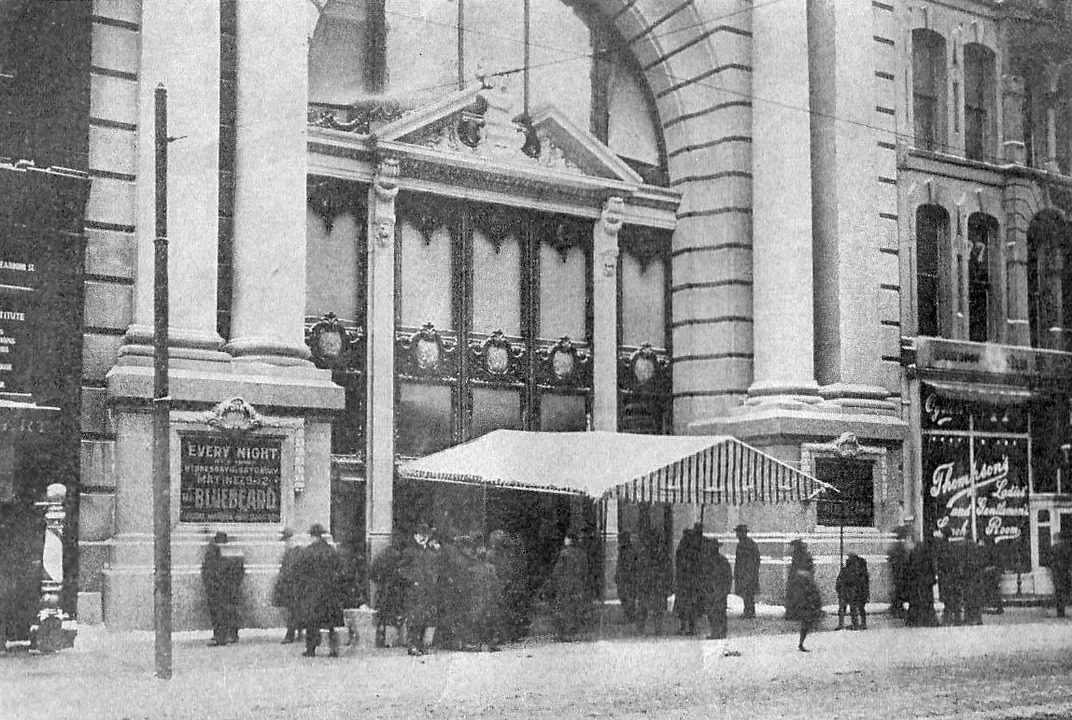
The Chicago Theatre didn’t last past the 1893 season, and locals once again turned to visiting touring acts and circus shows. In 1842, a group of Chicago residents formed an amateur theatre society, which thrived until, as legend has it, someone made off with the sets.
The next major turning point came in 1847 when John Rice, who had recently arrived from Buffalo, partnered with a local alderman to build a theatre on the corner of Randolph and Dearborn streets. The Rice Theatre opened on June 28 with a comedy called “The Four Sisters,” where Henry Hunt played all the leads. Local newspapers reported that audiences were overjoyed and enthusiastic about the plays.
The Rice Theatre quickly became a hot spot, attracting big stars of the day like Edwin Forrest and Junius Booth. Tragedy struck in 1850 when the theatre burned down, but a new brick building was erected on the same spot just six months later. In 1857, John Rice sold his theatre and embarked on a successful political career, eventually becoming the Mayor of Chicago. That same year, the McVicker’s Theatre opened, owned by an actor and former Rice employee who would later build a chain of theatres across the U.S.
For Chicago’s theatre community, the Great Fire of 1871 was both a devastating and transformative event. James McVicker and David Henderson took the lead in rebuilding the city’s theatres. Henderson, a Scottish-born journalist turned entrepreneur, built the Chicago Opera House and managed several other venues. He produced a series of musicals with exotic Levantine sets that not only revitalised the local scene but also earned the city a reputation as America’s theatre hub in the 1900s.
While the wealthy sought exotic shows from performers like Lydia Thompson and the British Blondes, new immigrants in the suburbs yearned for something familiar and found it in their own community theatres.
Small Theatres Take Centre Stage
A German-language troupe began performing in 1852, and others soon followed suit. At the turn of the century, a vibrant Jewish theatre scene emerged, even launching a few mainstream stars. The most famous was Muni Weisenfreund, who became Paul Muni on Broadway and in Hollywood. He made his stage debut at age 13 in 1908 at a theatre run by his parents near the Maxwell Street Market.
Another grassroots movement was the “little theatre” movement, which proudly embraced its amateur status. It took firm root in Chicago during the first quarter of the 20th century, starting with an amateur theatre founded in 1899 at Hull House. Maurice Browne, the movement’s founder, opened his influential Chicago Little Theatre in 1912. Almost everything that became significant in Chicago theatre in the years to come started in settlement houses and community halls. For instance, Viola Spolin was working for the Works Progress Administration when she began the research that led to her groundbreaking theatre games and, ultimately, to modern American improv in all its forms. Later, in the mid-1960s, Robert Sickinger’s nonprofit Hull House Theatre became a training ground for several key Chicago theatre figures, including playwright David Mamet.
Although commercial theatres thrived in Chicago after World War I, very few of them were homegrown. The city was mostly entertained by touring Broadway productions. The one consistent exception was the Goodman Theatre, founded in 1925. The most famous figure of this era was actress and critic Claudia Cassidy of the Chicago Tribune. Nicknamed the “Dragon Lady of Chicago,” she was famous for her scathing critiques of low-quality productions.
Chicago’s Theatre Scene in the Late 20th Century
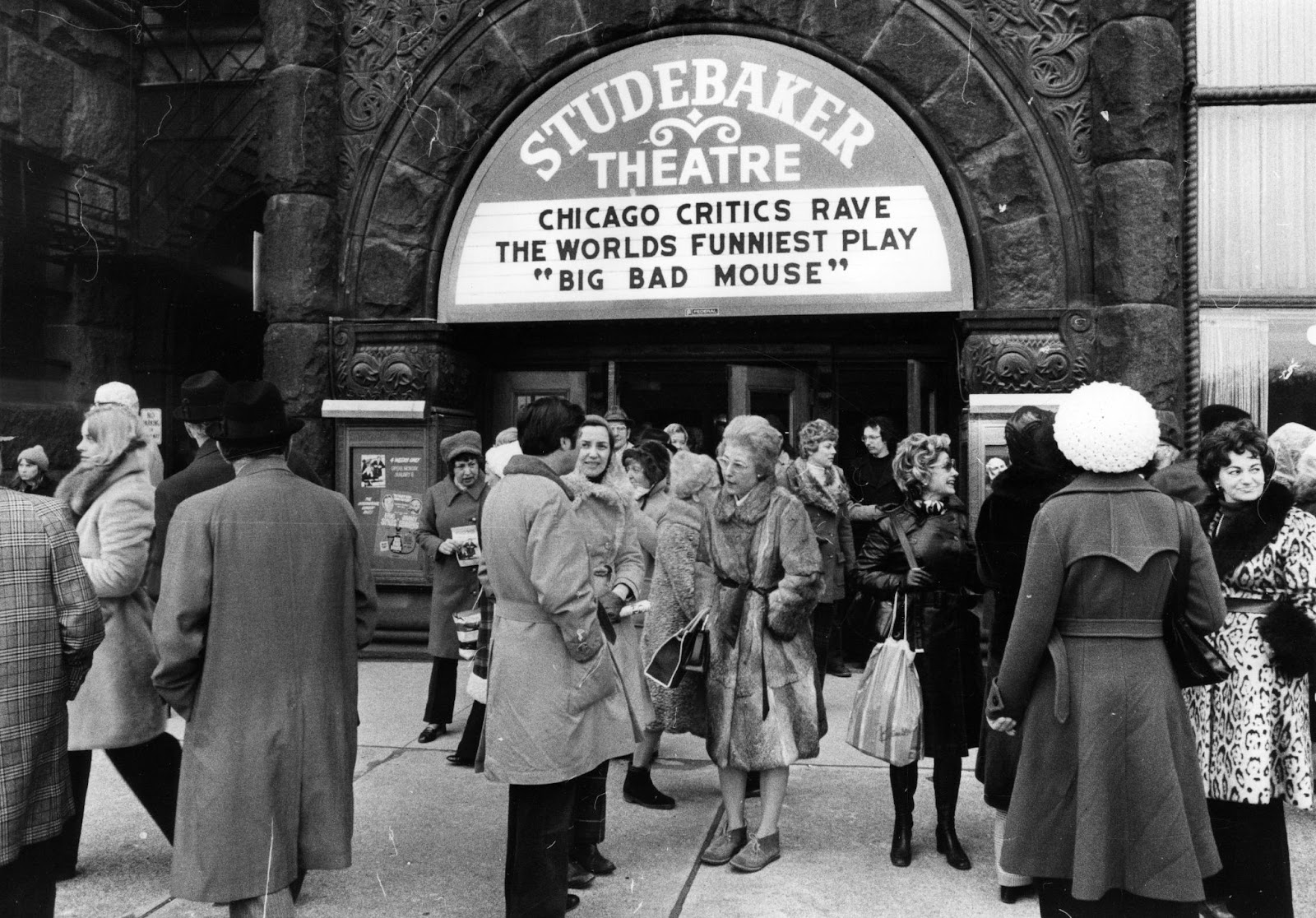
In 1955, Chicago’s theatre scene truly began to flourish. Two friends from the University of Chicago, Paul Sills and David Shepherd, founded the Compass Players. The men had already worked together at the Playwrights Theatre Club, staging two plays in just two years. But this time, they wanted to try something new. Shepherd envisioned a modern form of commedia dell’arte that would bring a lost spontaneity back to the stage, tackling current issues, assumptions, and even its own audience. Sills inherited the techniques that made his friend’s vision a reality. They assembled and trained an ensemble using theatre games and opened in Chicago’s Hyde Park neighborhood, where the talented performers acted in plays and sketches built on improvisation.
Their company, the Chicago Compass, lasted for a year and a half, leading to the creation of Second City in 1959 and dozens of other improve troupes and concepts, both on stage and in the media. The Chicago Compass can be considered Chicago’s first truly local theater, making a huge contribution to the performing arts.
In the 1960s and 1970s, more and more local theatres popped up in Chicago. Whether they knew it or not, young troupes followed the Chicago Compass’s strategy, performing in low-cost spaces like empty storefronts. Paul Sills himself helped spark the “off-Loop” trend by placing one of his experiments, the Body Politic, in a former bowling alley on Lincoln Avenue. The Kingston Mines, Victory Gardens, Organic, St. Nicholas, and Wisdom theatres were among the most prominent to emerge during this period.
In the 1990s, Chicago focused on redeveloping the northern part of the Loop, with plans to make it a theatre district. As a result, many large theatres offering large-scale, elaborate Broadway and Disney-style productions were built there. The third- and fourth-wave theatres that operated outside the Loop continue to exist and delight audiences with exciting productions in venues all over the city.