


American actress Carrie Coon is celebrated for her profound and psychologically intricate portrayals on both stage and screen. A Critics’ Choice Television Award winner and a multi-nominee for the Primetime Emmy, Golden Globe, and Tony Awards, Coon has become a powerhouse in the industry. While she has achieved widespread fame in television and film, Chicago’s vibrant theater scene served as the bedrock of her professional evolution. Her years spent performing in the city’s prestigious venues—most notably the Steppenwolf Theatre Company—defined her acting style and cemented her reputation as one of the most formidable stage performers of her generation. Read more at chicago-trend.
Early Career and Education
Born on January 24, 1981, in Copley, Ohio, Carrie Coon’s path to the spotlight was built on a strong academic foundation. She earned her B.A. in English and Spanish from the University of Mount Union in 2003, followed by a Master of Fine Arts (MFA) in Acting from the University of Wisconsin–Madison in 2006. Her professional stage career took flight immediately after graduation.
Coon’s early years were spent honing her craft in regional theaters. She made her professional debut in a production of Our Town at the Madison Repertory Theatre before spending four seasons with the American Players Theatre. This formative period allowed her to develop the technical precision and stage endurance that would later become her trademarks in Chicago’s competitive theater world.
The Steppenwolf Years
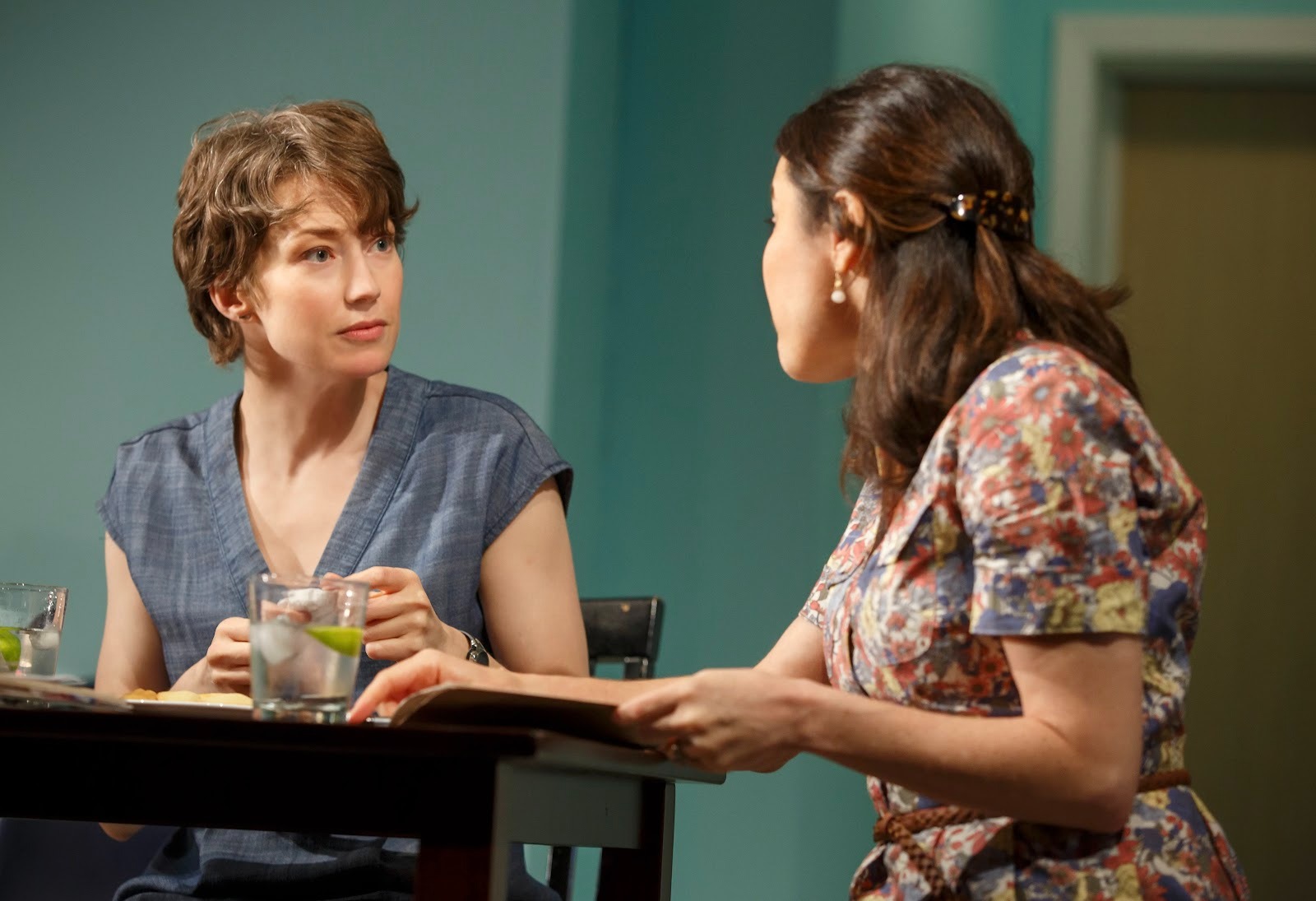
In 2008, Coon moved to Chicago, making her local debut in Remy Bumppo Theatre Company’s production of Brontë. For several years, she balanced her time between Chicago and Wisconsin, steadily building a diverse portfolio across various seasons and stages.
The watershed moment of her career came in 2010 when she was cast as Honey in Steppenwolf Theatre Company’s revival of Who’s Afraid of Virginia Woolf? This interpretation of Edward Albee’s masterpiece was a critical sensation, eventually moving to Washington, D.C., and then to Broadway. Coon’s Broadway debut earned her a Theatre World Award and a Tony Award nomination for Best Featured Actress in a Play. Critics hailed her performance for its delicate balance of vulnerability and simmering internal tension.
Following this success, Coon became a fixture at Steppenwolf. The theater’s famous ensemble-based model became her creative home, offering a space for immense professional growth. A highlight of this collaboration was her role in Tracy Letts’ Mary Page Marlowe in 2016, where she was one of six actresses portraying the title character at different stages of her life. Steppenwolf’s ensemble philosophy—emphasizing deep collaboration between actors and directors—served as a masterclass in stage discipline for Coon. In 2020 and 2021, she starred in Letts’ visceral play Bug, a role she is slated to reprise on Broadway in 2025.
From the Stage to the Screen
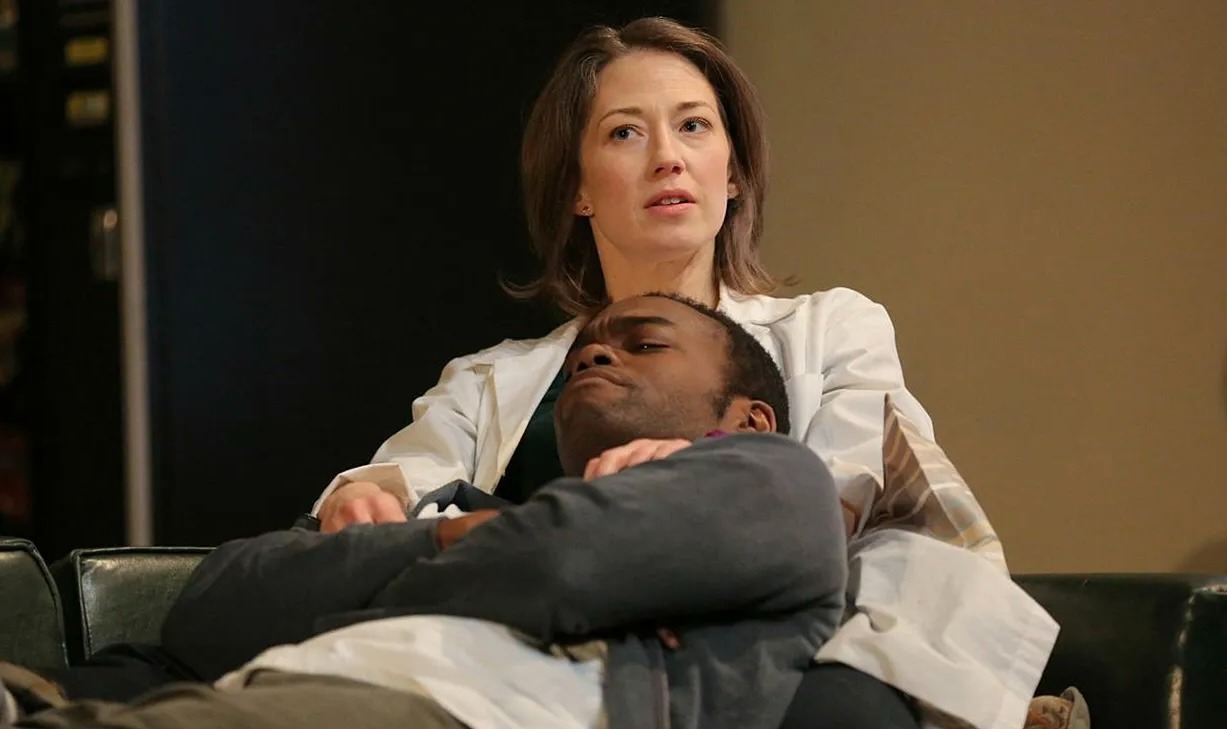
While dominating the stage, Carrie Coon also carved out an impressive niche in Hollywood. She first captured the film world’s attention in David Fincher’s Gone Girl (2014), where her portrayal of Margo “Go” Dunne showcased a sophisticated, introspective style of acting.
In 2017, she appeared in Steven Spielberg’s The Post, playing a journalist at the heart of a political firestorm. This was followed by a role in Steven McQueen’s heist thriller Widows (2018), where she delivered a performance praised for its psychological precision. These roles solidified her status as one of the most versatile actresses of her generation, capable of translating stage-bred intensity into cinematic brilliance. Her television resume is equally prestigious, featuring leading roles in The Leftovers (2014–2017), Fargo (2017), The Sinner (2018), and The Gilded Age (2022).
Her work across film and television has garnered numerous accolades, including a Critics’ Choice Television Award for The Leftovers. Her career remains a masterclass in balancing high-profile screen projects with a deep commitment to the theater.

Carrie Coon’s Chicago theater career is a testament to the power of the ensemble tradition. From her early days at Remy Bumppo to her breakout at Steppenwolf, her journey illustrates how a local stage can foster world-class talent. Despite her global fame, Chicago theater remains the core of her artistic identity.