


Nestled in the heart of the Lakeview neighborhood, the Briar Street Theatre stands as one of Chicago’s most compelling performance spaces. This venue seamlessly blends its early 20th-century industrial heritage with modern stage infrastructure, anchored by its decades-long association with the iconic Blue Man Group. The theater serves as a masterclass in repurposing historic architecture, evolving from a commercial facility into a cornerstone of the city’s cultural landscape. For over forty years, its transformation has helped define Chicago’s theatrical identity. Read more at chicago-trend.
A Look into the Building’s Historic Past
The structure was originally built in 1901 as the stables for Marshall Field and Company. At the time, these stables housed the horses responsible for delivering goods from one of the world’s most famous department stores. As motorized transport took over, the need for horse-drawn deliveries vanished, and the building eventually lost its primary purpose.
In 1970, the property was acquired by Walter Topel, founder of Topel and Associated, Ltd., from the Werner Kennelly Moving and Storage Company. Topel envisioned a creative future for the space, converting it into a soundstage and office for his film production firm. Between 1977 and 1985, it also housed the post-production company Cinetronics, Ltd., which later became Swell before moving downtown in 1984.
The site officially made its debut as a theater in 1985 and quickly became a staple of the Chicago arts scene. To this day, the Topel family remains the proud owner of the venue. One of its most striking architectural features is the original second floor, which is suspended from the ceiling by massive industrial turnbuckles—a design element that remains a signature part of the interior today.
The Briar Street Theatre offers an intimate 625-seat capacity. The stage features a proscenium layout, measuring 38 feet wide and over 32 feet deep, with a grid height of approximately 23 feet. The theater is fully equipped with modern accessibility features, including wheelchair-accessible seating and assisted listening loop systems. This blend of gritty industrial history and high-tech equipment ensures it remains a versatile venue for a wide range of performances.
The Blue Man Group Era
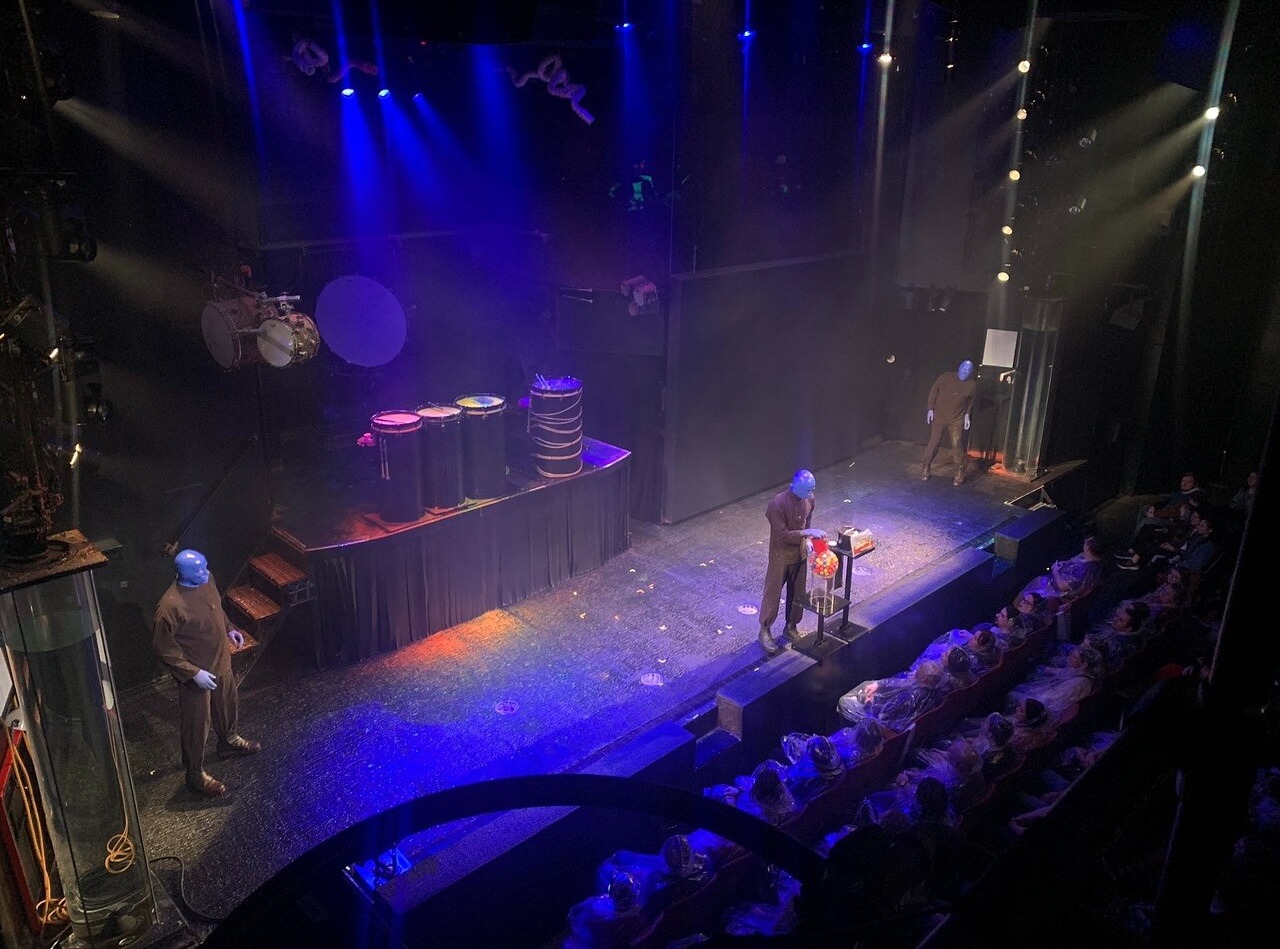
The most famous chapter in the theater’s history is undoubtedly its long-standing partnership with the Blue Man Group. The performance art collective, which gained fame in the late 1980s, took up residence at Briar Street in 1997. Their run lasted nearly three decades, finally taking a final bow in January 2025.
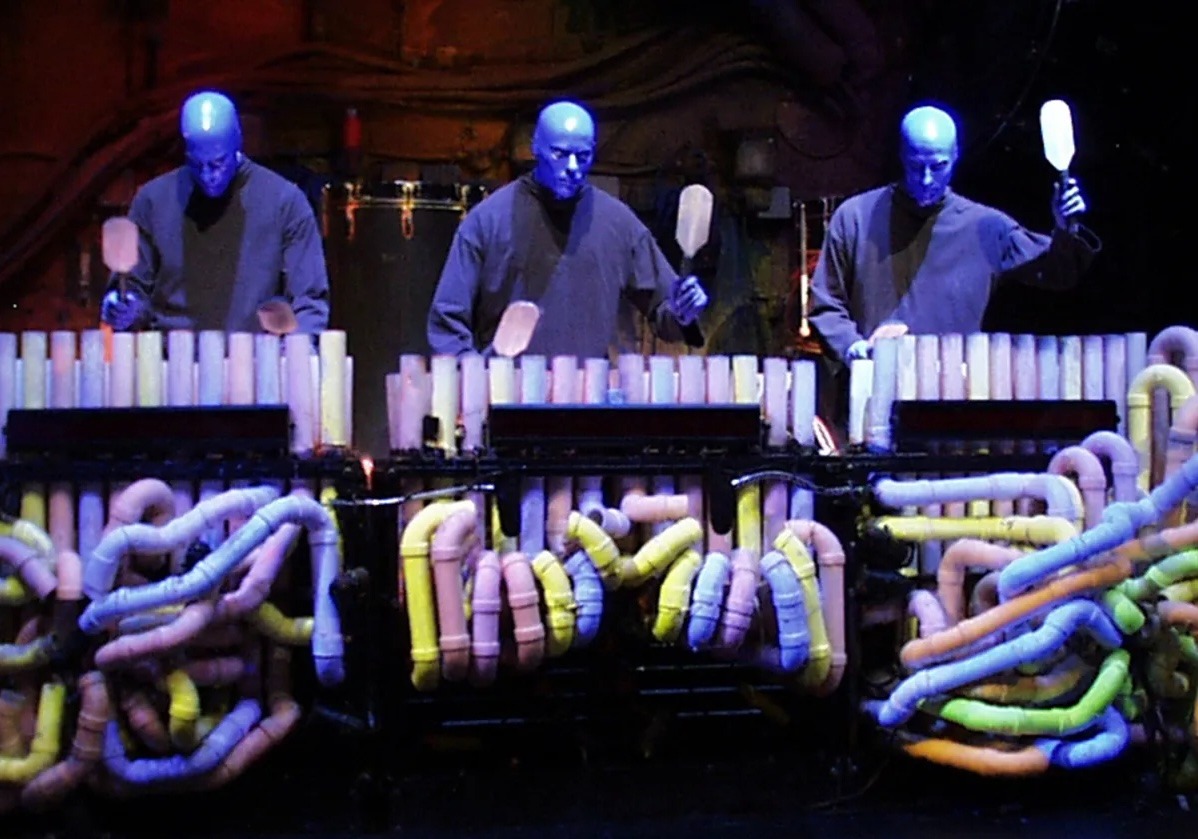
The Blue Man Group became a global sensation by blending music, comedy, and multimedia art. Their elaborate sets featured signature PVC pipe instruments, digital screens, LED effects, and their famous paint-splattered percussion. The first five rows were affectionately known as the “Poncho Seats,” where audience members were given plastic coverings to protect themselves from flying paint and props. Another fan-favorite interactive element was the “late alarm,” which playfully called out anyone sneaking into the theater after the show started. This legendary residency cemented Briar Street’s reputation as a premier destination on both a local and national level.
Beyond the Blue Man Group, the theater has hosted major productions from Fox Theatricals and other prominent producers. Some of the most notable plays staged here include:
- “Driving Miss Daisy” – The touching story of an elderly Jewish widow and her driver in mid-century Atlanta;
- “Laughter on the 23rd Floor”;
- “Having Our Say” – A play chronicling the extraordinary lives of the Delany sisters;
- “Jackie Mason’s Politically Incorrect”;
- “Picasso at the Lapin Agile” – Steve Martin’s celebrated 1993 comedy.
Throughout the years, Briar Street has remained a flexible home for everything from high-stakes drama to experimental performance art. Its stage has consistently welcomed touring productions and independent creative projects alike.
Legendary Stars of the Briar Street Stage
The theater has been graced by some of the most respected names in Hollywood and on Broadway. Among them was Mickey Rooney, an Oscar, Golden Globe, and Emmy winner whose career spanned almost the entire history of American show business. Other notable performers include Veronica Hamel, star of Hill Street Blues, and Tony Award winner Sada Thompson.
The list of luminaries continues with Oscar winner Ellen Burstyn and Tony winner Dorothy Loudon. Even the theater’s lobby reflects this commitment to high art, featuring works inspired by or connected to masters like Vincent van Gogh and Pablo Picasso, bridging the gap between the performing and visual arts.
The Briar Street Theatre is a shining example of how historic architecture can be successfully adapted for the modern age. Its journey from a Marshall Field stable to the iconic home of the Blue Man Group mirrors Chicago’s own cultural evolution. With its unique atmosphere and rich history, the venue remains a vital piece of the city’s artistic infrastructure, even as it enters a new era in 2025.