


As one of the most dynamic and innovative theatrical institutions in the United States, Chicago Shakespeare Theater blends the classical legacy of William Shakespeare with contemporary theatrical exploration. Located on the famous Navy Pier in Chicago, this theater has become a meeting point for cultures, languages, and generations, where classic works come alive with a modern rhythm. Also, learn about Steppenwolf Theatre Company—an organization that champions American theater. Read more at chicago-trend.com.
The Founding of the Theater
Chicago Shakespeare Theater was founded in 1986 under the name Shakespeare Repertory—a small theater company that staged performances in modest venues on Chicago’s North Side. The initiative was led by Barbara Gaines, a director with a profound artistic vision, and a group of like-minded actors and theater enthusiasts. They saw William Shakespeare’s works not as museum pieces, but as living, emotionally powerful, and deeply human material. In the beginning, it was a true leap of faith. Without significant funding and with limited technical equipment, but with a strong belief in the power of words and acting, Shakespeare Repertory captured the attention of the Chicago theater community with its honesty and passion. Barbara Gaines set a goal to make Shakespeare’s plays accessible, dynamic, and resonant for a modern audience. The performances were held in intimate halls but had a surprisingly powerful impact due to the energy of the acting, contemporary interpretations, and intellectual precision.
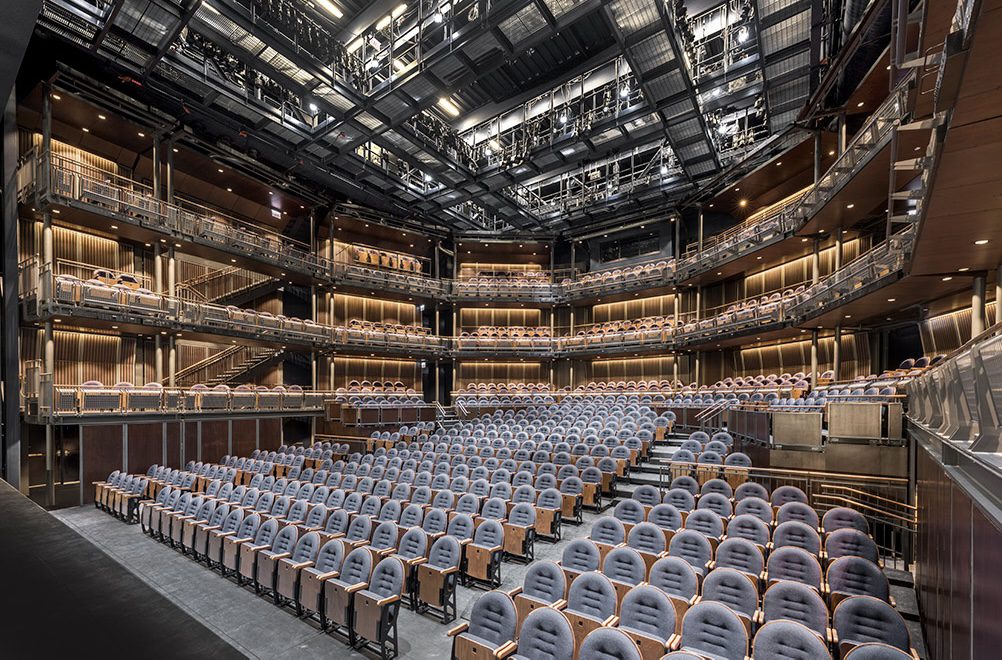
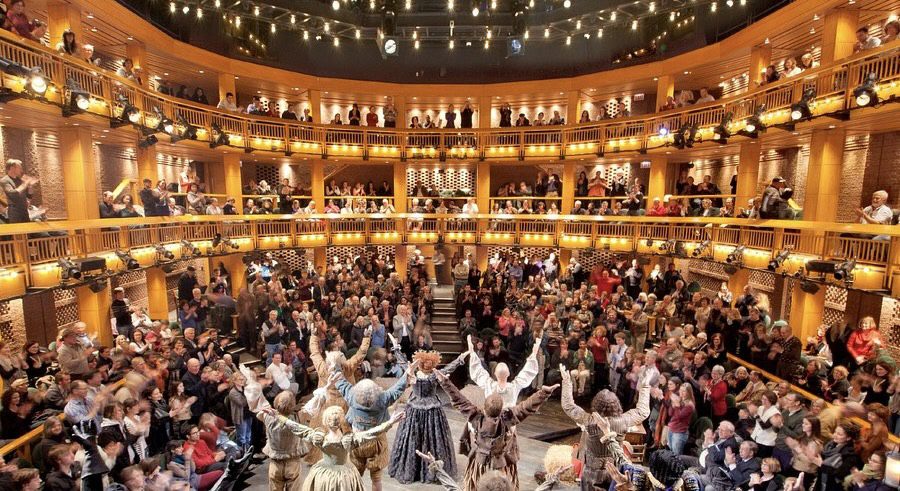
Throughout the 1990s, the theater rapidly gained a reputation as one of the best in Chicago, and later, in the United States. A pivotal moment in its development came in 1999 when Chicago Shakespeare Theater secured a new permanent home on Navy Pier. This move was more than just a logistical step—it was a symbolic event: a theater that had grown from an independent troupe transformed into a major cultural institution. The new theater center included two stages: the main 500-plus-seat Courtyard Theater and the smaller Thrust Stage for experimental productions. This allowed the theater to combine large-scale classical plays with intimate contemporary works, as well as host international tours, conduct educational events, and engage with a broader audience.
The Theater’s Repertoire
Despite its name honoring one of the greatest playwrights of all time, Chicago Shakespeare Theater (CST) has long expanded beyond an exclusively Shakespearean repertoire. The theater maintains a deep respect for the Bard’s legacy but strives to make it relevant, rediscover it for contemporary audiences, and broaden the theatrical language through new interpretations of classics, support for modern playwriting, and active international collaboration. On the CST stage, you might see “Hamlet” through the lens of a soldier’s post-traumatic stress, “Macbeth” with a futuristic techno aesthetic, or “Othello” as a social thriller about racial injustice. Such productions do not devalue the original text; on the contrary, they help the audience feel its depth and modern relevance.
In addition to Shakespeare’s works, CST actively engages with contemporary playwrights. The stage has featured plays by Tom Stoppard, Lynn Nottage, David Ives, Yasmina Reza, Tony Kushner, Sarah Ruhl, and many others. Many new works premiered here, and some were even commissioned specifically for CST.
An integral part of the theater’s strategy is international collaboration. CST regularly invites theater companies from around the world, including from the United Kingdom (Royal Shakespeare Company), South Africa (Market Theatre), Poland (Teatr Biuro Podróży), India (Company Theatre), Japan (Suzuki Company of Toga), Israel (Gesher Theatre), Germany, Italy, and Korea. CST’s international program aims not only to present global voices on the Chicago stage but also to change the very fabric of American theater—making it more open, multicultural, and multilingual. At CST, you might see a performance in Japanese with English subtitles, a performance in an African language with live music, or a Polish absurdist play adapted to the local context.

Educational Initiatives
Chicago Shakespeare Theater has long moved beyond the classic understanding of a theater as merely a place to watch plays. One of the institution’s key missions is educational transformation—using the art of theater as a tool to develop critical thinking, imagination, empathy, and civic consciousness in the younger generation. Each year, CST implements large-scale educational programs, engaging over 40,000 students from various Chicago neighborhoods and suburbs.
One of its flagship initiatives, Team Shakespeare, is aimed at middle and high school students. The program combines watching adapted plays with discussions, interactive workshops, teacher resources, and opportunities for students to interact directly with actors and directors. The core of CST’s approach is not to “explain” Shakespeare but to help young people feel his work. This is achieved through lively language, modern parallels, and the use of various forms, from physical theater to multimedia interventions. Furthermore, CST actively collaborates with educational institutions and teachers. The theater conducts professional training for educators, where they can master theatrical teaching methods, critical text analysis, and techniques for engaging with students through drama. The theater also supports special programs for students from low-income families, underfunded schools, and language minorities. Through grants and scholarships, CST provides free or subsidized access to the arts.
A separate focus is on research initiatives that study the impact of theater on cognitive development, emotional intelligence, and interpersonal skills in adolescents. CST collaborates with psychologists, educators, and universities to prove that theater is not just entertainment but a space for deep internal work and personal growth.
Societal Impact
Throughout its history, Chicago Shakespeare Theater has become not only a beloved theater for local audiences but also a landmark cultural institution on a national level. The pinnacle of official recognition came in 2008 when the theater was awarded the National Medal of Arts—the highest honor for artistic excellence in the United States, which annually recognizes organizations and individuals who have made significant contributions to the development of American art. But CST’s influence extends far beyond awards. The theater consistently ranks among the top stage venues in the U.S. by publications like The New York Times, American Theatre Magazine, and the Chicago Tribune. Its productions have repeatedly received prestigious accolades such as the Joseph Jefferson Awards and Drama Desk Awards, as well as honors from international festivals. The press praises the theater for its bold artistic choices, intellectual depth, and technical mastery.
CST’s greatest source of influence remains its ability to create a dialogue with society. The theater’s productions often touch on relevant themes: war, racial inequality, identity, power, and ethics. Its stage is a space not only for aesthetic experience but also for reflection, discussion, and the search for truth.
CST is more than just a stage; it is a platform for new voices, a hub for international dialogue, and an institution that offers its audience not just entertainment but also contemplation, catharsis, and discovery. The theater continues to experiment with forms, from the traditional stage to interactive performances, digital projects, and new technologies in playwriting.
Also, learn the story of the famous con artist Joseph Weil.