


There is probably no Chicagoan who has not visited the majestic Auditorium Theatre at least once in their lives. As reported at chicago-trend.com, this national and historic landmark is known worldwide for its acoustics, innovative architecture and stunning design.
How it all started
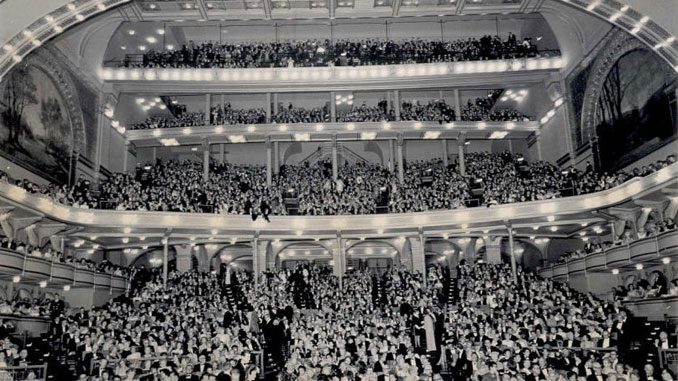
Chicago businessman Ferdinand W. Peck proposed the idea to the city department to create a theatre. Throughout his life, he made significant efforts to improve Chicago. In 1886, he began planning the construction of a building he named “The Auditorium Building.”
The building housed not only a theatre but also offices and a hotel. Peck intended to build a theater that would be accessible to all Chicago residents, thus founding the Chicago Auditorium Association and, subsequently, the theatre itself.
The theatre was designed by the architectural firm of Adler and Sullivan. The building was erected on swampland. Steel, wood, concrete and resin were used in the construction. The weight of the building amounted to 110,000 tons.
Its opening took place in 1889. The Auditorium Theatre was renowned for having the most modern equipment of its time. In addition, the establishment featured electric lighting and air conditioning, which required 15 tons of ice per day.
Adler and Sullivan were able to make the Auditorium the highest, first multifunctional building in Chicago’s history at that time. It had a 17-story tower and occupied nearly half of a city block.
The theater was built in the architectural style known as Richardsonian Romanesque, named after Henry Hobson Richardson. It is characterized by massive stone walls with rough finishes, striking semicircular arches, deeply set windows and a new dynamism in the interior space. Continuity and unity are keynotes of the Richardsonian style.
The theater was distinguished by massive walls of hewn stone and semicircular arches. The ceiling was made up of several arches, which was unprecedented for the late 19th century. The Auditorium Theatre resembled a horn in its shape.
The beauty of the ceiling was accentuated by 3,500 incandescent light bulbs placed along the arches and balcony facades. Thus, there was no need for a traditional central chandelier, which was typical of most 19th-century opera houses.
Mosaic marble floors covered the theater. In total, Sullivan used about 55 million pieces of mosaic tile. Six arched lunettes of art glass were placed above the entrance doors.
On the brink of disappearance
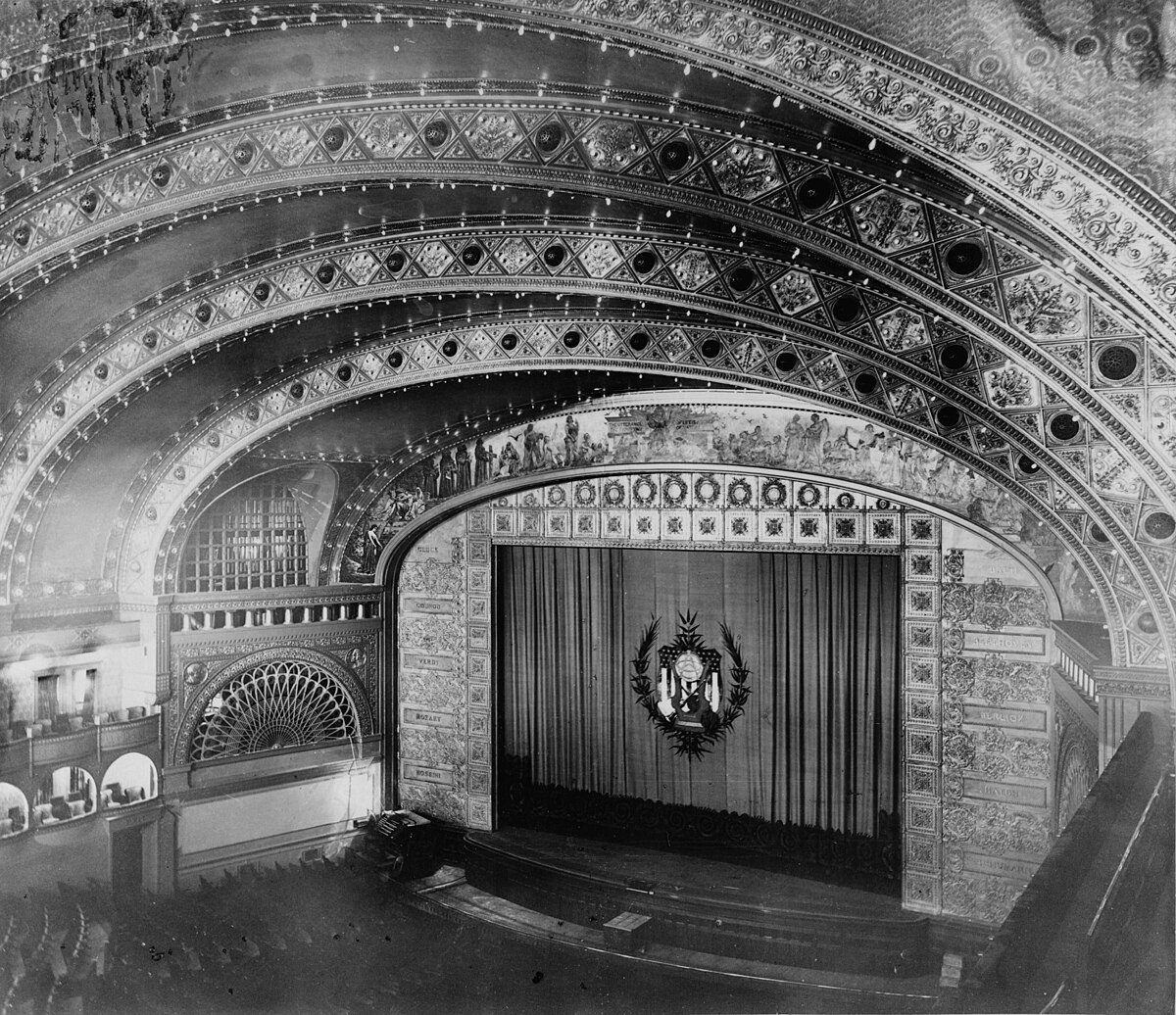
Despite the fact that the theater was quite popular among people and critics, it gradually declined. In 1904, the Chicago Symphony Orchestra moved from the theater to its own building (the concert hall now known as the Symphony Center). In 1929, the Grand Opera followed suit. As a result, the Auditorium Theatre no longer had permanent tenants. The theater went bankrupt in 1941 and was closed.
During World War II, the building was used as a recreation center for servicemen. This led to part of the theater being converted into a bowling alley.
In 1946, The Auditorium Building was acquired by Roosevelt University, and only the hotel and office spaces were used; the theater remained closed. In 1960, Beatrice Spachner raised 3 million dollars for its restoration.
In 1967, the renovated Auditorium Theatre reopened to the public. To mark this occasion, New York City Ballet took to the stage and, under the direction of George Balanchine, performed William Shakespeare’s comedy “A Midsummer Night’s Dream.”
The theater hosted various events, incuding classical concerts, ballet performances, Broadway productions and rock concerts featuring legendary artists.
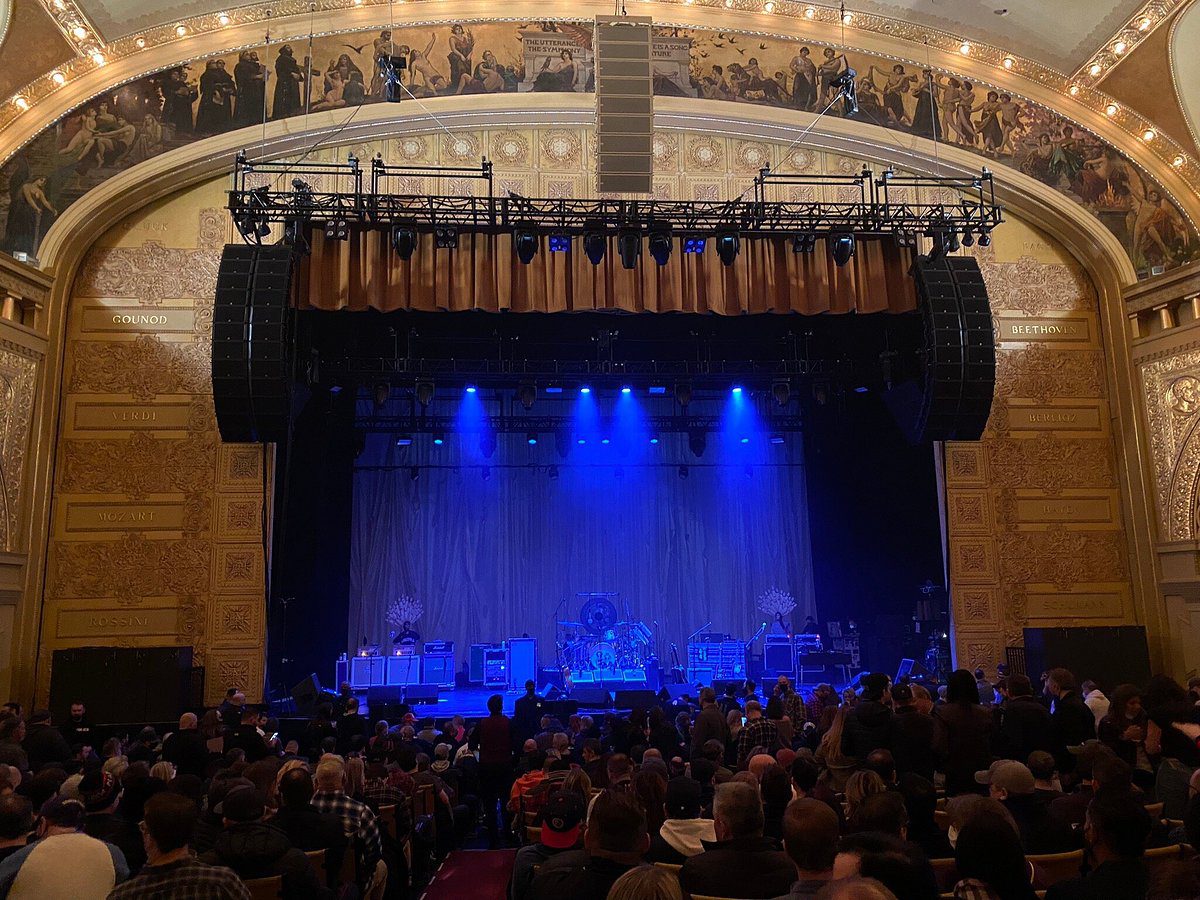
The modern Auditorium Theatre has a seating capacity of 3,901 and is considered the second-largest concert hall in the United States.
Musicals and live performances continue to be held on its stage.