


In Chicago, many theaters are part of the city’s cultural heritage, with “The Chicago Theatre” being among the most iconic. Here, we explore its rich history and development, as shared on chicago-trend.com..
The Early Beginnings of Moving Pictures
Chicagoans saw moving images for the first time at the 1893 World’s Columbian Exposition. Visitors were captivated by Anschütz’s electrotachyscope, a manually operated device using Geissler tubes to display a sequence of photos, creating the illusion of movement. This device projected 30 frames per second, providing an early glimpse of “moving pictures.”
Shortly after, low-cost nickelodeon theaters emerged as a popular pastime in Chicago. By 1913, the city had 606 such theaters, most set up in small storefronts, attracting crowds that often queued outside in the evenings.
The Opening of “The Chicago Theatre”
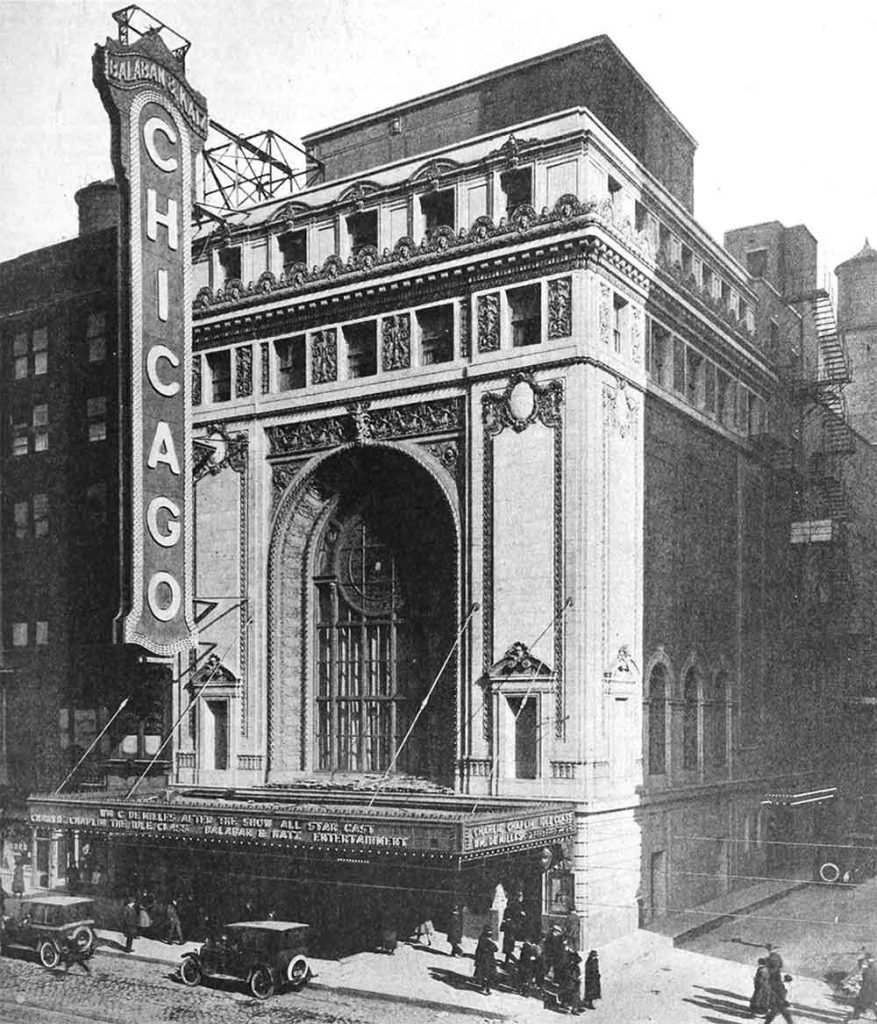
In the fall of 1921, when Balaban and Sam Katz opened The Chicago Theatre on North State Street, it attracted an enormous crowd. People lined up two hours before the scheduled opening, with crowds so large that 200 officers and 30 mounted police were dispatched to maintain order.
The Chicago Theatre, designed by renowned architects Rapp & Rapp, was part of the “Balaban and Katz” (B&K) theater chain. Built in French Baroque style, the theater featured both film premieres and live performances.
The grand opening was a memorable event. Charles H. Walker welcomed the audience, while 125 ushers guided guests to their seats. The Chicago Theatre Symphony Orchestra, composed of 50 musicians, played an overture, followed by a solo performance by famed organist Jesse Crawford. Audiences enjoyed a lineup of short films, a musical performance, and finally, a full-length feature, The Sign on the Door, starring Norma Talmadge. Between films, orchestral performances and live acts kept the audience entertained.
Interestingly, the theater even offered child care services so that parents could fully enjoy the shows on stage.
Fascinating Facts
In 1922, jazz musicians performed at The Chicago Theatre during “Syncopation Week.”
Founded in 1916, the Balaban & Katz chain grew to manage over 100 theaters nationwide, with 50 in Chicago alone. Balaban and Katz spent $4 million on The Chicago Theatre’s construction.
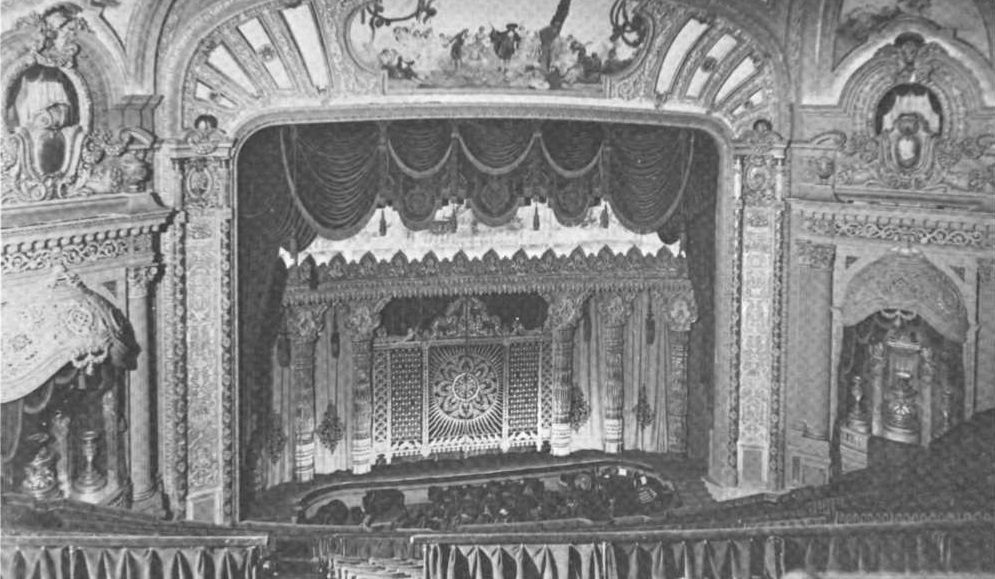
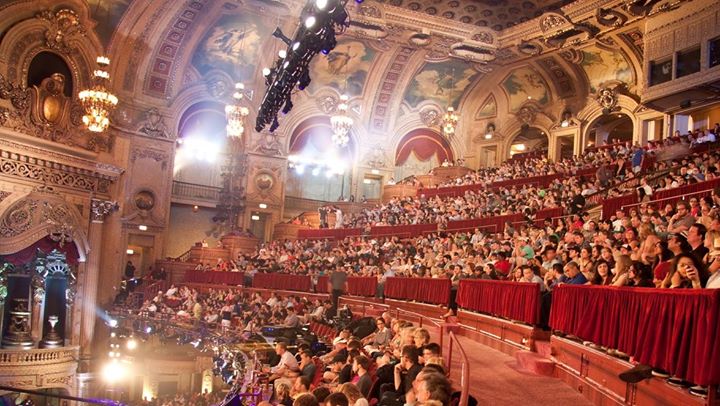
At its opening, the theater was dubbed the “Wonder Theatre of the World.” With luxurious interiors featuring décor from Marshall Field and ceiling frescoes by Louis Grell, it was a testament to opulence. The grand staircase, inspired by the Paris Opera House, added a touch of French elegance to Chicago.
The theater’s capacity was originally 5,000 seats: the main hall could seat 2,600, the mezzanine held 500, and the balcony accommodated 900.
The audience could mingle on the balcony and in the mezzanine, under a stunning dome adorned with Louis Grell’s frescoes, illuminated by crystal chandeliers.
In November 1921, Billboard magazine hailed the theater as an architectural triumph. Despite its size, seating was comfortable and offered good visibility of the stage, with new imported furniture adding to the luxurious experience.
In 1926, Famous Players-Lasky Corporation acquired a controlling share from Balaban and Katz, forming Paramount Publix Corporation, a cinematic powerhouse that merged with theater operations.
In 1983, The Chicago Theatre was listed as a Chicago Landmark.
On September 15, 1986, after his performance, Frank Sinatra signed the backstage wall, starting a tradition where each performer leaves an autograph.
The Theater’s Development Through the Years
In 1933, the theater hosted the Century of Progress exhibition, leading to its first renovation, during which Louis Grell updated his frescoes with Greek and Roman mythology themes.
During World War II, patriotic shows and films drew large crowds, and stars like Frank Sinatra and Danny Kaye frequently performed on its stage.
By the 1950s, attendance declined, prompting another renovation that did little to boost numbers. By the end of the decade, live performances ceased entirely.
Without live shows, The Chicago Theatre struggled against increasing competition. In 1973, live performances returned, drawing talented actors and musicians back to its stage.
In 1985, a major restoration was undertaken at the cost of $4.3 million, culminating in a grand reopening in 1986 with a sold-out show by Frank Sinatra.
In 2007, Madison Square Garden Entertainment Corp. acquired the theater and currently manages it.
The Chicago Theatre continues to captivate audiences, with film enthusiasts and theatergoers alike hailing it as one of the city’s best venues.